Pump Package Solutions
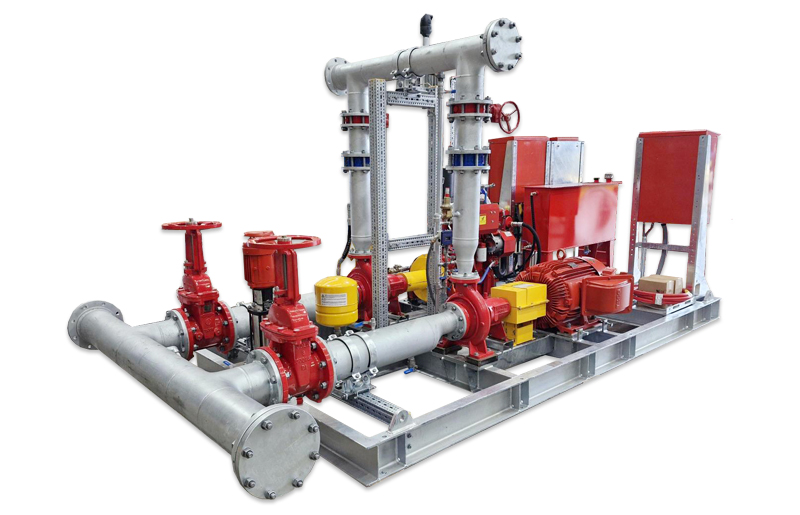 Dynapumps offers engineered pump package solutions for fluid and vacuum management tailored for industrial environments. Since 1981, the company has built a reputation for delivering integrated, pre-assembled systems that adhere to complex mechanical, electrical, and structural guidelines. By focusing on skid-mounted or containerized solutions, Dynapumps reduces site footprint, shortens installation timelines, and mitigates project risks.
With dedicated project management and engineering teams, Dynapumps oversees the entire deployment lifecycle—from pump selection and system modeling to fabrication, testing, and commissioning.
Dynapumps serves critical resource and utility sectors, including:
- Mining & Minerals: Heavy-duty slurry handling, raw water transfer, and automated dewatering pontoon packages.
- Oil & Gas / Energy: High-compliance API process packages engineered to withstand extreme marine or onshore refinery conditions.
- Water & Wastewater Treatment: High-efficiency raw water intake, packaged booster stations, and chemical dosing skids.
- Fire Protection: Turnkey fire pump systems fully certified to strict standards, including AS2941, NFPA20, and FM approvals.
¦ Pump Package Selection Matrix
|
Package Type
|
Core Pump Technology
|
Major Industry Standards
|
Typical Operational Features
|
Key Applications
|
|
Fire Pump Systems
|
End-suction, split-case, multistage, or vertical turbine pumps.
|
AS2941, NFPA20, FM 3-7.
|
Electric/diesel configurations, standalone controllers, acoustic containers, built-in jockey pumps.
|
Plant fire protection, offshore rigs, remote mine site distribution.
|
|
Water Booster Stations
|
Vertical multistage or centrifugal transfer pumps.
|
AS/NZS 4020, custom water authority codes.
|
VSD controls, custom HMI touch screens, onboard fluid storage tanks.
|
Municipal supply, washdown systems, plant potable water.
|
|
API Process Packages
|
Centrifugal (OH2, BB, VS series), plunger, or diaphragm metering pumps.
|
API 610, API 674, API 675, ANSI B73.1.
|
Exploded-zone electronics, chemical-injection manifolds, high-pressure duplex pipework.
|
Petrochemical refineries, pipelines, chemical injection, anti-foaming.
|
|
Dewatering & Floating Pontoons
|
Self-priming centrifugal, end-suction, or submersible borehole pumps.
|
Marine and structural codes, mining site specs.
|
Floating pontoon frames, diesel-driven emergency skids, heavy-duty abrasion resistant wet ends.
|
Pit dewatering, tailings dam decant return, raw water intake.
|
|
Industrial Vacuum Skids
|
Liquid ring, rotary vane, dry claw, or dry screw vacuum pumps.
|
ISO quality and environmental frameworks.
|
Inlet gas separators, automated priming controllers, central vacuum optimization panels.
|
Food freeze-drying, soil remediation, hospital/medical suction, brick extrusion.
|
¦ Frequently Asked Questions (FAQs)
- What are the primary structural and testing advantages of choosing a pre-assembled pump skid over on-site build?
- Pre-assembled pump skids are completely fabricated, wired, and tested in a controlled workshop environment prior to delivery. This minimizes high-risk on-site welding, structural modifications, and electrical debugging. Once delivered, these packages require simple mechanical line hookups and primary power termination, greatly shortening project deadlines.
- Are Dynapumps packages custom-designed or off-the-shelf catalog configurations?
While Dynapumps maintains standardized baselines for common applications (such as AS2941 fire systems), most packages are custom-engineered. Their technical team adapts structural sizes, metallurgical specifications (e.g., Duplex SS, Carbon Steel), valve arrays, and electrical logic controls to exactly match your site’s data sheet specifications.
- How do integrated Variable Speed Drives (VSDs) benefit custom pump packages?
Integrating VSDs via control automation panels allows the system to change pump motor frequencies dynamically based on real-time process demand. For example, in water distribution networks, the VSD ramps pump speed up or down to hold system pressure exactly at a preset baseline as system demand shifts, eliminating water hammer and reducing energy bills.